
Your dog has been limping since breakfast. Your cat threw up twice and is now hiding under the bed. Is that a job for an urgent care vet, or does it need a 24-hour emergency hospital? Most owners type “emergency vet near me” and drive to whatever shows up first. Sometimes that is exactly right. Often it means hours in an ER lobby behind critical cases for a problem a local vet near me could have handled the same day. This guide explains what each type of clinic does, which symptoms belong where, and how to decide quickly.
What an Urgent Care Vet Handles
An urgent care vet treats problems that need attention today but are not putting your pet’s life at immediate risk. Your pet sees a licensed veterinarian, gets a full exam, and can have tests, medication, and minor procedures done in one visit.
The Gap Urgent Care Fills
Regular appointment books often fill up days ahead. Emergency hospitals see patients in order of severity, so a dog with an itchy ear can wait for hours while trauma cases go first. Animal urgent care sits between the two. At Tracy Veterinary Medical Center, walk-ins are welcome while we are open, and a quick call lets the team prepare. If you need an urgent care vet near me in Tracy, Mountain House, or Lathrop, these visits fit.
Common Reasons Pets Visit Vet Urgent Care
- Recent vomiting or diarrhea in a pet that is still alert and drinking
- Limping with no obvious fracture
- Small cuts, scrapes, or a torn nail
- Ear infections, constant head shaking, or a foxtail in an ear or paw
- Red, squinting, or goopy eyes
- Hives or a puffy face after a bee sting, with normal breathing
- Urinary accidents in dogs and female cats
- Cracked or broken teeth
A note on foxtails. These barbed grass awns dry out across the Central Valley in late spring and summer and work into ears, noses, and paws. A dog shaking its head hard after a walk near a dry field is a textbook vet urgent care case. Early removal is quick. A week later, it can mean an abscess.
What an Emergency Vet Is Built For
An emergency vet, or emergency animal hospital, is staffed for life-threatening situations at any hour, with teams trained in critical care, oxygen therapy, transfusions, and overnight monitoring.
Signs That Mean Go Straight to the ER
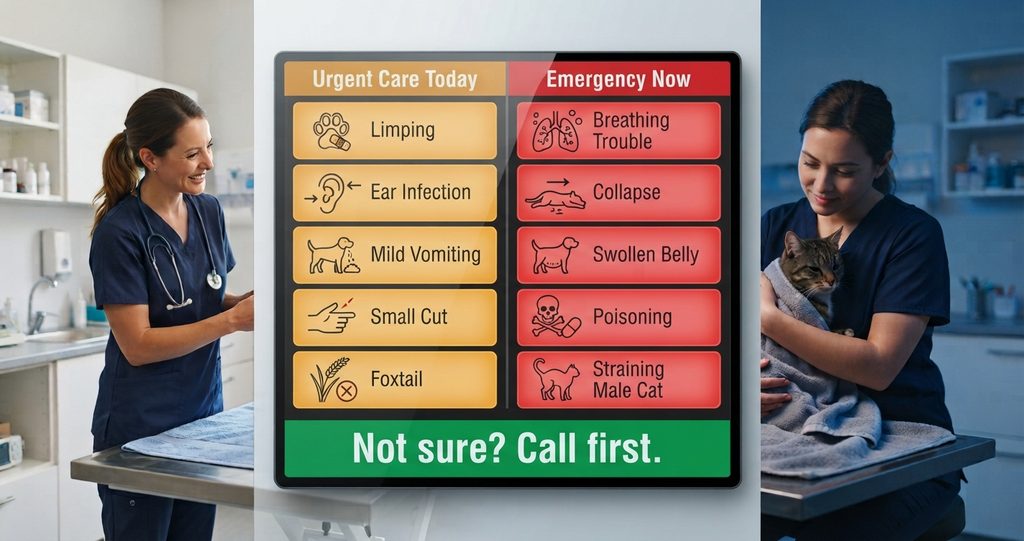
The American Veterinary Medical Association keeps a list of animal emergencies that need immediate veterinary care. Head to the closest emergency vet if you see:
- Trouble breathing, choking, or blue or gray gums
- Bleeding that does not slow after five minutes of firm pressure
- Collapse, unconsciousness, or inability to stand
- A seizure lasting more than a few minutes, or several in a row
- A swollen, tight belly with retching that brings nothing up
- Known ingestion of antifreeze, rodent bait, xylitol, or human prescription drugs
- Being hit by a car or attacked by another animal, even if your pet seems fine
- A male cat straining in the litter box with little or no urine
That swollen belly can signal bloat, which mostly affects large, deep-chested breeds like Great Danes and German Shepherds. It can turn fatal within hours.
When the Line Gets Blurry
A dog that vomited once and is now begging for food is an urgent care patient. The same dog vomiting repeatedly, with a painful belly and pale gums, is an emergency. Severity and trend decide where you go. When unsure, call. Two minutes on the phone with a veterinary team is the fastest triage tool you have.
Urgent Care Vet vs Emergency Vet: Side-by-Side Comparison
| Factor | Urgent Care Vet | Emergency Vet |
|---|---|---|
| Best for | Same-day problems that are not life-threatening | Life-threatening injury or sudden severe illness |
| Availability | Extended daytime and evening hours | Typically open around the clock |
| Wait times | Usually shorter, especially if you call ahead | Triage order, so stable pets may wait |
| Staffing | General practice veterinarians and technicians | Emergency and critical care clinicians |
| Hospital stays | Day treatment, then home | Overnight ICU care, oxygen, transfusions |
| Overall bill | Generally lower for the same problem | Higher, reflecting 24-hour critical care staffing |
Symptom Triage Guide: Where Should Your Pet Go?
| Symptom | Urgent care if… | Emergency vet if… |
|---|---|---|
| Vomiting | One or two episodes, pet alert | Repeated, bloody, or with a swollen belly |
| Diarrhea | Mild, pet still eating | Bloody, with weakness, or in an unvaccinated puppy |
| Limping | Bearing some weight | Dangling limb or after a fall or car strike |
| Wound | Small, bleeding controlled | Deep, gaping, or bleeding past five minutes |
| Allergic reaction | Hives, breathing normally | Any breathing difficulty or collapse |
| Toxin exposure | Call poison control or your vet first | Known toxic amount or symptoms starting |
Urgent Care for Dogs
Garbage raids, chewed toys, and long runs on hot pavement drive most same-day dog visits. When you need urgent care for dogs, the visit starts with vital signs and a hands-on exam, and testing follows only when findings call for it. Puppies with vomiting and diarrhea get priority because parvovirus moves fast, and we can run a parvo test during the visit.
A fractured tooth with exposed pink pulp counts as a dog dental emergency, yet it rarely needs a 24-hour hospital. A same-day visit for pain control, then a planned procedure, is the usual path. Heatstroke is different. Central Valley summers reach triple digits, and a dog that collapses or cannot stop panting needs an ER.
Urgent Care for Cats
Cats hide illness well. Hiding, skipping meals, or sleeping in odd spots deserve a same-day look. If you are searching for cat urgent care near me, our team can examine your cat and run lab work for urinary, dental, or kidney problems.
Two cat situations skip urgent care entirely. The Cornell Feline Health Center calls urethral obstruction in cats a true medical emergency, and owners often mistake it for constipation. Any contact with true lilies is the other, since even licked pollen can damage a cat’s kidneys.
Poisoning and Toxin Exposure
ASPCA Poison Control received calls about more than 376,000 substances pets were exposed to in 2025, according to its top 10 pet toxins report, led by over-the-counter medications and supplements. The ASPCA also reports that 50 to 75 percent of its cases could be safely managed at home. So call the ASPCA Animal Poison Control Center at (888) 426-4435 or your veterinarian before driving anywhere, and keep the packaging handy.
What the Search Data Says About Pet Owners Under Pressure
We reviewed U.S. monthly search volumes from our 2026 keyword research for phrases owners type when something goes wrong.
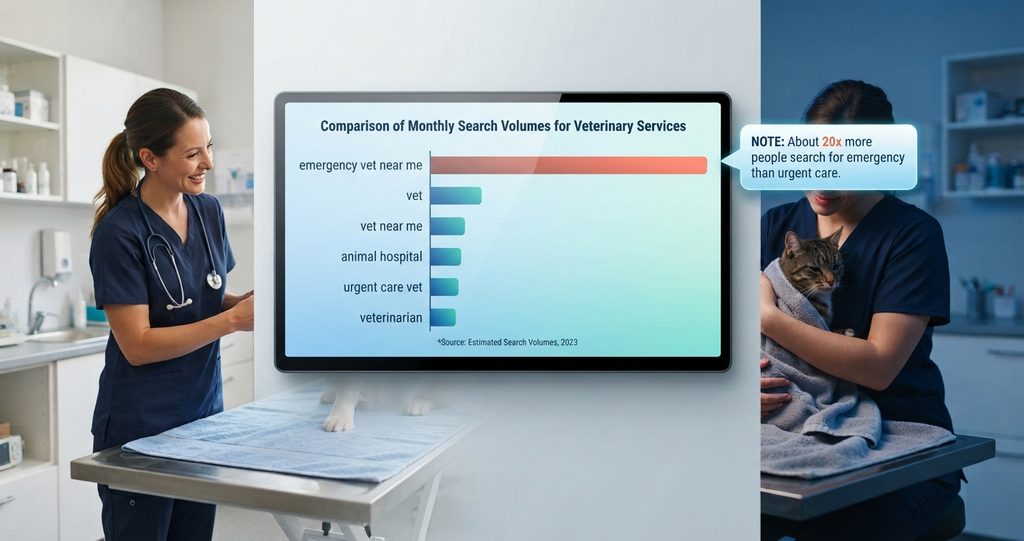
| Search term | Average monthly searches (U.S.) |
|---|---|
| emergency vet near me | 201,000 |
| emergency vet | 60,500 |
| urgent vet | 18,100 |
| urgent care vet near me | 9,900 |
| vet urgent care | 8,100 |
| pet urgent care near me | 8,100 |
“Emergency vet near me” outnumbers “urgent care vet near me” roughly 20 to 1. Yet the AVMA’s list of true emergencies is short, and ASPCA data shows many toxin calls never need a hospital. Our read: many owners default to “emergency” because they do not know an urgent vet option exists.
Decision Walkthroughs: Three Common Situations
These are illustrative scenarios, not individual patient records.
The Cat Who Skipped Breakfast
Your cat ignored breakfast and is hiding, but comes out when called and used the litter box normally. Where to go: urgent care the same day. If your cat is male and straining with nothing coming out, go to the ER immediately.
The Lab Who Swallowed a Sock
Your Labrador ate a sock an hour ago and seems fine. Where to go: call first. Depending on timing, a veterinarian may help your dog bring it back up safely. Repeated vomiting or a painful belly suggests a blockage. Our clinic performs foreign body removal through its veterinary surgery near me services, but urgent surgery always starts with a phone call.
The Dog Who Collapsed on a Hot Afternoon
Your dog went wobbly after playing outside and is panting heavily with a bright red tongue. Where to go: the nearest emergency vet, now. Wet the coat with cool, not ice-cold, water and run the car air conditioning on the drive.
What to Expect at an Urgent Care Visit in Tracy
Before You Leave Home
- Call (209) 447-0395 so the team can prepare
- Skip website forms for urgent problems, since they will not hold a visit
- Bring current medications and any packaging from something your pet ate
- Use a carrier for cats and a towel sling for large dogs that cannot walk well
Diagnostics, Treatment, and Estimates
Our clinic works as a veterinary diagnostic center for urgent cases, with in-house lab testing, multi-view radiographs, urinalysis, and rapid parvo and FeLV/FIV tests. For belly pain or a suspected foreign object, a pet ultrasound near me visit can reveal changes X-rays miss. Most pets go home the same day with medication from our in-house pharmacy. Once your pet is stable, you receive a written estimate before further treatment.
When Our Clinic Is Closed
Tracy Veterinary Medical Center is not a 24-hour hospital. After we close, find an emergency animal hospital near me that is open overnight and go directly there rather than sending a website message. Searching “emergency vet Tracy CA” at midnight costs minutes, so plan now.
Build Your Pet Emergency Plan Today
Veterinarians at Texas A&M recommend keeping a written pet emergency plan with key numbers in one place:
- Save our number, your nearest 24-hour emergency vet, and the ASPCA poison line
- Drive the ER route once so you are not navigating in a panic
- Keep a carrier, leash, and large towel near the door
- Stock gauze, self-adhesive wrap, saline, and a digital thermometer
Why Tracy Pet Owners Trust Our Team
Tracy Veterinary Medical Center opened in 2023, founded by four people who live in this community. Our listed doctors bring more than 60 years of combined experience, including Dr. Tejinder Khehra, who completed a residency at Mississippi State University, and Dr. Gurvinder Pal Singh, with 16 years in practice. A visiting board-certified veterinary surgeon supports advanced cases. For owners searching “pet urgent care near me” or “animal urgent care near me,” lab, imaging, and pharmacy under one roof means fewer referrals and faster answers.
Frequently Asked Questions
-
What is the difference between an urgent care vet and an emergency vet?
An urgent care vet treats problems that need same-day attention but are not life-threatening, such as ear infections, minor wounds, limping, or mild vomiting. An emergency vet handles critical situations like breathing trouble, collapse, severe bleeding, bloat, or poisoning, usually around the clock. Urgent care visits often mean shorter waits, while ER hospitals see the sickest patients first. If you cannot tell which your pet needs, call a veterinary team and describe the symptoms before you drive.
-
Can an urgent care vet handle emergencies?
Many urgent care clinics can stabilize serious cases during open hours. Tracy Veterinary Medical Center welcomes emergencies and walk-ins while open and performs urgent surgery when the team is called ahead. Pets that need overnight intensive care, oxygen support, or continuous monitoring are better served at a 24-hour emergency hospital. The safest move is always to call first so the team can tell you whether to come in or go straight to the nearest ER.
-
Should I go to an emergency vet near me if my dog ate chocolate?
It depends on the type of chocolate, how much was eaten, and your dog’s size. Dark and baking chocolate are far more dangerous than milk chocolate. Call your veterinarian or the ASPCA Animal Poison Control Center right away with the wrapper in hand. They can estimate the risk and tell you whether home monitoring, an urgent care visit, or an emergency vet is the right choice. Tremors, a racing heart, or restlessness mean go now.
-
Can I walk in to vet urgent care without an appointment?
Yes. Walk-ins are welcome at our clinic during open hours, and most urgent care practices work the same way. Calling ahead is still the smartest step because it lets the team prepare a room, gather supplies, and give you an honest idea of timing. Avoid using online forms for urgent problems, since they are not monitored in real time and will not reserve a visit for your pet.
-
How do I know if my cat needs urgent care or the ER?
Cats that are hiding, skipping a meal, vomiting once or twice, or showing mild eye or skin problems can usually be seen at urgent care the same day. Go to the ER if your cat is breathing with an open mouth, straining in the litter box without producing urine, had contact with lilies, or cannot stand. Male cats with urinary straining are the most common feline emergency, and that problem can become life-threatening within a day.
The right choice is usually the fastest one that matches how sick your pet really is, and when you are unsure, a phone call is always the best first step.